Iran · 25 min hands-on · 95 min waiting · Vegan · Side dish · For confident cooks
Kateh
For 4 servings · US units
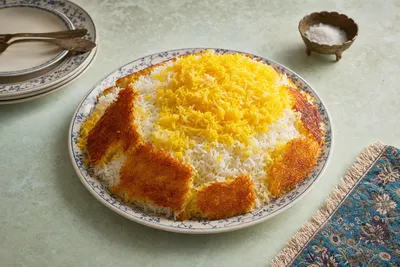
Persian rice cooked in its own water, then steamed until a crisp crust forms
With kateh, nothing is drained: the rice drinks up all of its cooking water, then steams quietly under a cloth-wrapped lid while a golden crust forms on the bottom of the pot. It is the calm, dependable rice of everyday cooking, and it comes to the table that way too, alongside khoresh, kebab, chicken and other Iranian dishes.
Ingredients
- 1⅓ lbricePersian rice or basmati, washed and soaked
- 4⅔ cupswaterfor cooking; adjust to the rice variety, plus extra water for washing and soaking
- 2 tspsaltmeasure carefully, as the cooking water is not drained
- 4 tbspoilor melted butter; into the cooking water and around the edge before steaming
- 2 tbspground and steeped in hot water, to drizzle over part of the rice (optional)Dried stigmas of a crocus that turn food golden yellow and give it a bittersweet, floral aroma.Substitute: There is no real substitute, because the aroma is unique. Turmeric or safflower give only the colour, not the flavour; it is better to use a little less saffron than to replace it.Read more
Method
- Wash the rice until clearPut the long-grain rice in a bowl, cover it with cold water and move it gently with your hands. Pour off the cloudy water and repeat several times, until the water stays clear.
- Soak the riceCover the washed rice with fresh water, add a pinch of the salt and leave it to soak for 30 minutes to 2 hours. This lets the grains cook up long and separate.
- Set the rice and water onPour off the soaking water. Put the rice in a heavy-bottomed pot with the cooking water, the remaining salt and some of the vegetable oil. Since the water won't be drained later, go carefully with the salt, and adjust the amount of water to suit your rice.
- Skim off the foamBring everything to the boil and skim off the white foam that gathers on the surface with a spoon.
- Boil until holes appearCook the rice uncovered over medium heat for about 15 to 20 minutes, stirring as little as possible. It is ready for the next stage when the water has almost evaporated and small holes appear on the surface, with steam escaping through them.
- Shape a dome, poke steam holesUse a spoon to push the rice towards the centre into a dome. With the handle of a wooden spoon, poke a few holes down to the bottom so the steam can circulate. Spread the remaining oil, or melted butter, around the edge or over the top. If you like, drizzle the steeped saffron over part of the rice.
- Steam under the clothWrap the lid in a clean tea towel, set it firmly on the pot and steam the rice over the lowest possible heat for 30 to 45 minutes. In this time the grains turn light and fluffy, and the crust forms on the bottom.
- Rest and turn outTake the pot off the heat and let the rice rest briefly. Then either fluff it with a fork or turn the pot out onto a large plate so the crust sits on top, and serve straight away.
Tips and variations
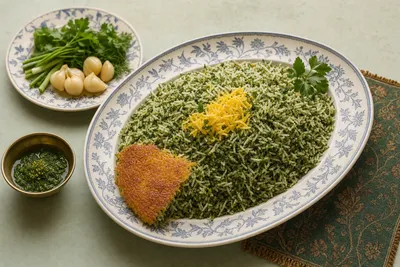
Freshly harvested rice shouldn't be soaked, or it will turn mushy; basmati can also be cooked straight away without soaking and turned out onto a plate, crust and all, once steamed. For colour, soak part of the rice in saffron water and spoon it over the top. Pre-cooked broad beans and dill, folded in before steaming, make a fresh green version for spring. For a red kateh, soak and cook the rice in puréed tomato juice instead of water, with fried onion, turmeric, pepper, tomato paste, diced potato and butter. Made with oil rather than butter, kateh stays vegan. At the table it goes with a khoresh, kebab or chicken; it is especially good with pan kebab of spiced minced meat, sliced tomato, tomato paste and sour pomegranate molasses, and fried potatoes, laid out right on top of the rice.
Something not right?
This recipe was put together from independent sources and checked before publishing. Even so, a mistake can slip through — an amount that does not add up, a step that does not work as written. If you spot something, write to us: we will look into it and put it right.