Iran · 75 min · Vegetarian · Dessert · For confident cooks
Halva
In German: Persische Halwa · In English: Persian Halva
For 8 servings · US units
Toasted flour, saffron and rose water: a smooth confection for guests
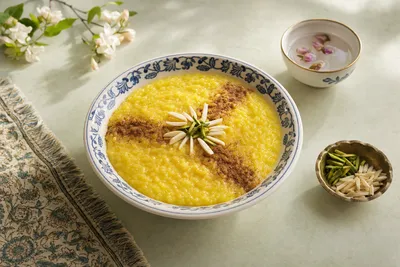
This halva begins with flour toasted slowly until it smells of nuts, then bound with a saffron and rose water syrup into a dense, glossy paste. In Iran this version is called 'Majlesi' halva, the halva made for guests and gatherings. It comes to the table spread smooth on a plate and scattered with pistachios, almonds and coconut.
Ingredients
- 8¾ ozfloursifted, dry-roasted
- ⅔ cupoilneutral, for roasting the flour
- 3½ ozbutterunsalted; can be replaced entirely with oil
- 11½ ozsugarfor the syrup
- 2 cupswaterfor the syrup
- ½ cupadded to the syrupA watery distillate of rose petals with a strong floral scent, used by the drop or the spoonful.Substitute: There is no true substitute; orange blossom water is just as floral but tastes of citrus rather than rose, and rose syrup adds sugar as well. When in doubt, leaving it out is better than flavouring with something else.Read more
- ½ tspground, bloomed in a little waterDried stigmas of a crocus that turn food golden yellow and give it a bittersweet, floral aroma.Substitute: There is no real substitute, because the aroma is unique. Turmeric or safflower give only the colour, not the flavour; it is better to use a little less saffron than to replace it.Read more
- ½ tspgroundGreen cardamom pods, whose small black seeds give a strong, floral, resinous aroma.Substitute: Ground cardamom will do at a pinch, about a quarter teaspoon for three or four pods, but tastes flatter; black cardamom is no substitute, as it is smoky rather than floral.Read more
- pistachiosground, for garnish
- almondsslivered, for garnish
- desiccated coconutfor garnish
- dried, for garnish (optional)Dried petals of the Damask rose, fragrant and slightly tart.Substitute: A few drops of rose water give the scent, but neither the colour nor the petals as a visible ingredient. Use rose water sparingly, or it quickly tastes soapy.Read more
Method
- Making the saffron syrupStir the water and sugar together in a saucepan over gentle heat until the sugar has completely dissolved. Add the saffron, bloomed in a little water, and the rose water, stir briefly, then take the syrup off the heat.
- Dry-toasting the flourPut the sifted flour into a wide frying pan and toast it dry, without any fat, over gentle heat. Stir constantly until the flour smells nutty and has turned a pale golden colour.
- Roasting in the fat and cardamomAdd the oil and butter to the flour and stir until smooth. Keep roasting the mixture for a few minutes, then stir in the cardamom.
- Adding the syrupPour in the syrup a little at a time, stirring hard after each addition so that no lumps form. Take care: the pan may hiss and spit as the syrup goes in.
- Stirring until it leaves the panKeep stirring over gentle heat, or swirl the pan, until the mixture pulls away from the sides and comes together into a cohesive, glossy mass.
- Smoothing it onto the plateSpread the halva onto a plate, smooth it with the back of a spoon and let it cool a little.
- Garnishing and servingFinish with the ground pistachios, slivered almonds and desiccated coconut, and with dried rose petals if you like.
Tips and variations
The butter can be replaced entirely with oil. In that all-oil version, some cooks also add a little solid cooking fat to the oil. For an especially fine texture, sift the toasted flour once more before the fat goes in. The cardamom can go into the syrup rather than the flour. The saffron can also be bloomed on ice cubes. A garnish of cinnamon, ginger and sesame joins the nuts and coconut in some homes. Shîrânî, a version with walnuts, skips the dry toasting: the flour goes straight into the oil and butter, and walnuts, salt, sugar and vanilla sugar toast along with it. A pale syrup takes the place of the saffron syrup to bind the mixture. Sprinkled with rose water, the halva rests overnight and is cut into pieces to serve with cardamom coffee or tea. Majlesi halva is best served slightly cooled, once your guests are at the table.
Allergens
Contains: Cereals containing gluten, Milk (including lactose), Tree nuts
These notes follow from this recipe's ingredient list. Ready-made products and brands may contain further allergens — please check the packaging yourself.
Something not right?
This recipe was put together from independent sources and checked before publishing. Even so, a mistake can slip through — an amount that does not add up, a step that does not work as written. If you spot something, write to us: we will look into it and put it right.