60 min hands-on · 105 min waiting · Meat · Main course · For beginners
Khoresh-e Bademjan
In German: Auberginen-Schmorgericht · In English: Persian eggplant stew
For 6 servings · US units
Braised eggplant and beef in a gently sour tomato sauce
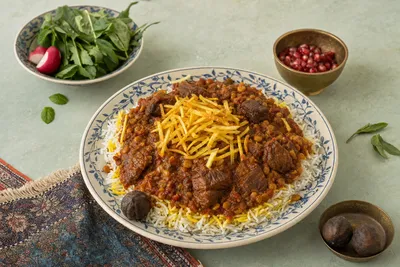
Eggplant, fried until golden, is laid into a pot of slow-braised beef and tomato near the end, where it softens and draws in the sauce. Dried limes or sour grapes lend a quiet sourness that keeps the richness of the meat in balance. This is a khoresh for summer and autumn, when eggplants and tomatoes are at their best, and it is served with rice.
Ingredients
- 6eggplantsliced or halved lengthwise, peeled or skin on
- 1⅓ lbbeefstewing meat, cubed
- 2onionchopped, for sautéing
- 3tomatohalved or sliced
- 4 tbsptomato paste
- ½ tspturmericground
- ½ tspblack pepperground
- 1 tspsaltadjust to taste
- ⅓ cupoilfor frying eggplants and onions
- 6⅓ cupswaterfor simmering, meat should be covered
- ground, for sournessWhole limes sun-dried until hard, hollow and brown to black; they give stews a sharp, almost smoky sourness.Substitute: There is no truly good substitute. Fresh lime juice with a little grated zest, added towards the end, supplies the sourness but not the fermented, slightly bitter depth that defines the dish; a little sumac comes somewhat closer to the tart character but is milder.Read more
- 1lemonjuice, added at the end (optional)
- ½ cupfor sourness (optional)Green, unripe grapes, very sour and barely sweet; used in Persian cooking whole, as juice, or dried and ground.Substitute: For the acidity, use verjuice or abghooreh, or failing that lemon juice, which tastes sharper and less fruity; none of these replaces the whole berries that burst in the mouth, so the dish loses that texture.Read more
- ½ tspcinnamonground (optional)
- 1 pinchground, bloomed in 2 tbsp hot water (optional)Dried stigmas of a crocus that turn food golden yellow and give it a bittersweet, floral aroma.Substitute: There is no real substitute, because the aroma is unique. Turmeric or safflower give only the colour, not the flavour; it is better to use a little less saffron than to replace it.Read more
Method
- Slice the eggplants or halve them lengthwise, peeling them or leaving the skin on as you prefer. If you like, soak them in salted water for 30 minutes, then rinse and pat them thoroughly dry.
- Heat some of the oil in a frying pan and fry the eggplants on both sides until golden brown. Lift them onto kitchen paper to drain and set them aside.
- Heat a little more oil in a heavy pot and cook the chopped onions until golden. Add the cubed beef, brown it on all sides, and season with the turmeric and black pepper.
- Stir in the tomato paste and let it toast briefly, until it darkens and smells fragrant. Pour in enough water to cover the meat, bring it to a boil, then lower the heat and let it braise gently for about 2 hours, until the beef is tender. Persian cooks call this long, unhurried cooking, in which the stew settles and comes together, “ja oftadan.”
- Meanwhile, halve the tomatoes and sear them briefly in the frying pan, or simply slice them.
- Once the meat is tender, season with salt and add the sourness: ground dried limes or sour grapes. Let the stew simmer a little longer so the flavours meet.
- Carefully lay the fried eggplants and the tomatoes into the pot. Simmer, partly uncovered, for 10 to 20 minutes, until the sauce has thickened and the eggplants have soaked it up.
- To finish, stir in lemon juice or the saffron bloomed in hot water, if using. Serve the khoresh with rice.
Tips and variations
Chicken pieces can be used in place of the beef; they need only about 90 minutes in the pot. The sourness can come from sour grapes rather than dried limes, or from fresh lemon juice added at the end, ideally with a pinch of cinnamon. Canned tomato sauce can take the place of the fresh tomatoes. A layer of fried onions over the eggplants and a little saffron round the dish out further.
Something not right?
This recipe was put together from independent sources and checked before publishing. Even so, a mistake can slip through — an amount that does not add up, a step that does not work as written. If you spot something, write to us: we will look into it and put it right.