Gilan · 60 min · Vegetarian · Main course · For beginners
Baghali Ghatogh
For 4 servings · US units
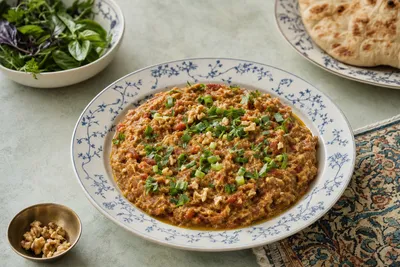
Fava beans with plenty of dill and garlic, topped with softly set eggs
Baghali Ghatogh comes from Gilan, the province along the Caspian Sea, where it is everyday cooking: beans, dill and garlic braised in butter, with eggs laid on top to set slowly in the steam. It is at its best in spring, when fresh beans are in season. It is eaten with fluffy kateh rice and fresh garlic on the side, as a main meal or as a starter.
Ingredients
- 10½ ozpeeled (remove both skins from fava beans); soak dried beans beforehandLarge, flat legumes with pale green seeds, nutty and slightly bitter; usually eaten with the tough seed skin removed.Substitute: Edamame or green lima beans match the colour and bite fairly well, but lack the slightly bitter, grassy note of fava beans.Read more
- 4 tbspdilldefining herb of the dish
- 3eggsset on top of the stew at the end
- 5 clovesgarlicfinely grated or crushed
- 1 tspturmeric
- 2⅛ ozbuttercan be partly or fully replaced by oil
- 2⅛ cupswateradd hot, just covering the beans
- ½ tspblack pepper
- saltto taste
- ground and dissolved in a little water, for drizzling (optional)Dried stigmas of a crocus that turn food golden yellow and give it a bittersweet, floral aroma.Substitute: There is no real substitute, because the aroma is unique. Turmeric or safflower give only the colour, not the flavour; it is better to use a little less saffron than to replace it.Read more
- cinnamonsprinkled over at the end (optional)
Method
- Peel the beansPeel the beans. If you are using fava beans, remove both skins so that only the tender green kernels remain. If using dried beans, soak them beforehand and drain them well.
- Soften the garlic in butterMelt the butter in a wide pot or deep frying pan over medium heat. Add the grated garlic and cook gently for 1 to 2 minutes, until fragrant. It should not take on any colour.
- Toast the spicesAdd the turmeric and black pepper and toast for about 30 seconds, until the butter turns a glossy golden yellow.
- Fry the beans and dillAdd the beans, turn them well in the fat and fry for 3 to 4 minutes. Stir in the dried dill and let it cook for a minute, until it releases its aroma.
- Simmer until tenderPour in the hot water until the beans are just covered. Cover the pot and simmer over low heat for 20 to 30 minutes, until the beans are tender but not yet falling apart.
- Season and reduceSeason with salt. If there is still too much liquid in the pot, take off the lid and let the stew reduce for a few minutes, until it is thick and silky.
- Add the eggs and let them setCrack the eggs directly onto the stew, leaving a little space between them, and salt them lightly. Put the lid back on and let the eggs set over low heat for 5 to 8 minutes. From this point on, do not stir.
- Garnish and serveIf you like, drizzle over a little saffron water and scatter a pinch of cinnamon on top. Serve the baghali ghatogh hot with kateh rice.
Tips and variations
Instead of fresh or frozen beans, you can use dried ones soaked for 6 to 12 hours. Besides fava and lima beans, pach-baghala, the fava beans of Rasht, work well, as do Rashti or Kashavarzi beans; tinned butter beans or cannellini beans will do at a pinch. A bunch of fresh dill can stand in for the dried. Soak dried dill briefly first, so it softens and its scent opens up. More water makes a soupier version. If you prefer, pierce the yolks and swirl them through the stew, or cook the eggs uncovered rather than with the lid on. A squeeze of lemon juice, saffron water, fried onions and a knob of butter make a good finish. At the table, it wants a bowl of kateh rice and a few cloves of fresh garlic alongside.
Allergens
Contains: Eggs, Milk (including lactose)
These notes follow from this recipe's ingredient list. Ready-made products and brands may contain further allergens — please check the packaging yourself.
Something not right?
This recipe was put together from independent sources and checked before publishing. Even so, a mistake can slip through — an amount that does not add up, a step that does not work as written. If you spot something, write to us: we will look into it and put it right.