Shiraz & Fars · 50 min hands-on · 100 min waiting · Fish · Main course · For confident cooks
Meygoo Polo
In English: Shrimp Rice
For 4 servings · US units
Shrimp polo from Bushehr, tart with tamarind and green with cilantro and dill
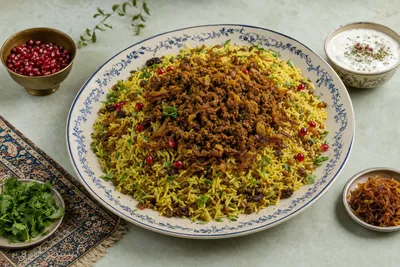
Meygoo Polo comes from Bushehr on the Persian Gulf and carries the flavors of Iran's south: shrimp in a seasoning of tamarind, cilantro, dill and chili, layered between loose grains of saffron rice. As the pot steams slowly, a golden crust forms on the bottom. It is a festive dish, the kind that comes to the table when guests are expected.
Ingredients
- 15¾ ozricelong-grain, e.g. Persian or basmati; rinsed and soaked
- 15¾ ozshrimppeeled, deveined, patted dry
- 2onionfinely diced or sliced, fried golden
- 3 clovesgarlicgrated or finely chopped
- 3½ ozcilantrofresh, roughly chopped
- 2¾ ozdillfresh, chopped; dried as a substitute
- 1 tspdried; or a little fresh, chopped – use sparingly, turns bitterThe leaves of the fenugreek plant, usually used dried, with a strong, savoury-bitter aroma reminiscent of maple syrup and curry.Substitute: There is no good substitute, since no other herb reproduces the distinctive fragrance. A very small pinch of ground fenugreek seeds comes closest in aroma but is more bitter and lacks the green herbal note; it is better to obtain the leaves.Read more
- 5¼ ozseedless, soaked in warm water and strained; for the tangy southern styleThe sour, fruity flesh from the pods of the tamarind tree, usually sold as a pressed block or a ready-made paste.Substitute: Lime juice with a little brown sugar replaces the sourness but not the dark, fruity depth reminiscent of dates or prunes, so the dish tastes brighter and sharper.Read more
- 1 tbsptomato pastebriefly fried with the spices
- 1 tspturmericground
- ½ tspblack pepperground
- ½ tspchili powderred chili, cayenne or flakes, to taste
- 2 tbspbloomed in hot water; for shrimp and riceDried stigmas of a crocus that turn food golden yellow and give it a bittersweet, floral aroma.Substitute: There is no real substitute, because the aroma is unique. Turmeric or safflower give only the colour, not the flavour; it is better to use a little less saffron than to replace it.Read more
- 5 tbspoilfor frying and for the pot bottom
- saltfor soaking and cooking water and the shrimp mixture
- 1 tspcoriander seedcoarsely crushed (optional)
- ½ tspcuminground (optional)
- 1 tbspfrom dried limes (limoo amani), for tartness (optional)Whole limes sun-dried until hard, hollow and brown to black; they give stews a sharp, almost smoky sourness.Substitute: There is no truly good substitute. Fresh lime juice with a little grated zest, added towards the end, supplies the sourness but not the fermented, slightly bitter depth that defines the dish; a little sumac comes somewhat closer to the tart character but is milder.Read more
- 1 tspcurry powderor Persian spice blend (advieh) (optional)
- 1 tspgingerfreshly grated or ground (optional)
- 1potatothinly sliced or grated for the crust (tahdig); flatbread as an alternative (optional)
- 3½ ozraisinsstirred into the shrimp mixture (optional)
- 2⅛ ozwalnutschopped, stirred into the shrimp mixture (optional)
- 1lemonjuice for drizzling before serving (optional)
Method
- Prepare the ingredientsWash the rice in several changes of water until it runs clear, then leave it to soak in salted water for 1 to 2 hours. Soak the tamarind pulp in warm water for about 15 minutes, squeeze it well and strain off the liquid. Crush the saffron and bloom it in 2 tbsp hot water (saffron water). Peel and devein the shrimp, rinse them and pat them thoroughly dry. Wash the cilantro and dill, let them drain well and chop them roughly.
- Fry the onions and garlicFry the onions in some of the vegetable oil over medium heat for 8 to 10 minutes, until golden; set a handful aside for the garnish. Add the garlic and cook it only briefly, just until fragrant.
- Toast the spices and herbsStir in the turmeric, black pepper, chili powder and tomato paste, along with the coriander seed, cumin, ginger and curry powder or advieh if you are using them, and toast everything for 1 to 2 minutes without letting the spices burn. Add the cilantro, dill and fenugreek leaves and cook for 2 to 4 minutes, until the liquid has evaporated; no longer, or the herbs will turn bitter.
- Cook the shrimp in tamarindPour in the tamarind liquid with a little salt, and the dried lime powder if you like, and let it simmer and reduce for 5 to 7 minutes. Add the shrimp with some of the saffron water and cook for 3 to 5 minutes, until they are pink and just cooked through. Stir in the raisins and walnuts if using. Take the pan off the heat.
- Parboil the riceDrain the soaked rice, tip it into a large pot of rapidly boiling salted water and parboil for 6 to 8 minutes. Drain it while the center of each grain is still firm.
- Prepare the pot for the crustCoat the bottom of a heavy pot with the remaining vegetable oil. For the crust, lay slices of potato or a piece of flatbread snugly across the bottom if you like.
- Layer rice and shrimpLayer the rice and the shrimp mixture alternately in the pot, finishing with a layer of rice. Use the handle of a wooden spoon to poke a few holes down to the bottom so the steam can escape.
- Steam the riceWrap the lid in a clean kitchen towel and set it firmly on the pot. Let the rice heat through over medium-high heat for 5 minutes, then turn the heat down low and steam for 35 to 45 minutes.
- Plate and garnishDrizzle the rice with the rest of the saffron water and, if you like, some lemon juice, mix gently and spoon onto a platter. Scatter over the fried onions you set aside and lay the crust from the bottom of the pot alongside.
Tips and variations
For especially tender shrimp, leave the shrimp mixture out of the layers and spoon it over the steamed rice only for the last 10 minutes. Without tamarind, the tartness can come from dried lime powder or fresh lemon instead. For a sweet-and-sour version, add raisins, walnuts and a little cinnamon to the shrimp mixture. For a different crust, spread grated potato with saffron, salt and a cup of water over the bottom of the pot. To serve, break the crust into pieces and arrange them around the rice so every guest gets some.
Allergens
Contains: Crustaceans, schalentiere
May contain if you use the optional ingredients: Tree nuts, Sulphur dioxide and sulphites
Not every ingredient in this recipe has been checked, so nothing is promised as free from.
These notes follow from this recipe's ingredient list. Ready-made products and brands may contain further allergens — please check the packaging yourself.
Something not right?
This recipe was put together from independent sources and checked before publishing. Even so, a mistake can slip through — an amount that does not add up, a step that does not work as written. If you spot something, write to us: we will look into it and put it right.